A Caesarean section is a major abdominal surgery, and while the incision may heal within the first several weeks, the tissues around a C-section scar can continue to change for months—or even longer.
For some people, a C-section scar eventually becomes barely noticeable and causes no problems at all. For others, the area may continue to feel tight, sensitive, numb, tender, itchy, or restricted long after the initial recovery period.
At Reform Health + Wellness in Red Deer, acupuncture and gentle cupping therapy may be incorporated into an individualized treatment plan to help address discomfort, sensitivity, and restricted tissue mobility around a fully healed C-section scar.
Why Can a C-Section Scar Feel Tight or Uncomfortable?
Scar formation is a normal part of the body's healing process.
After a C-section, the body repairs several layers of tissue that were affected during surgery. As these tissues heal, collagen fibres are deposited and gradually remodel. The scar that you can see on the surface is only one part of this healing process.
In some cases, the skin and tissues surrounding the scar may not move as freely as they once did. People may describe sensations such as:
- Tightness or pulling around the lower abdomen
- Tenderness when touching the scar
- Numbness or altered sensation
- Tingling, burning, or increased sensitivity
- A feeling that the skin does not move normally over the tissues underneath
- Discomfort when stretching or extending the abdomen
- Sensitivity from waistbands or clothing
- Discomfort during certain exercises or daily movements
Some people notice these symptoms only a few months after giving birth, while others may continue to experience scar-related discomfort years after their C-section.
A scar does not necessarily need to be new to be assessed or treated.
How Can Acupuncture Be Used Around a C-Section Scar?
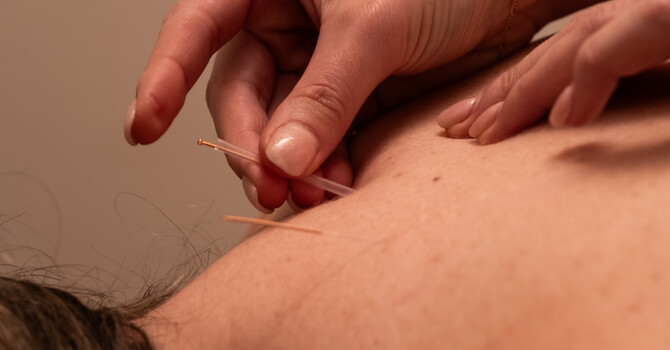
Acupuncture involves inserting very fine, sterile needles into carefully selected areas of the body.
When treating a healed surgical scar, acupuncture may be performed around or adjacent to the scar, depending on the individual and how the tissues respond.
Treatment may be used with the goal of helping to:
- Reduce localized pain or tenderness
- Decrease excessive sensitivity around the scar
- Address altered sensation
- Improve comfort with movement
- Treat surrounding muscle tension
- Encourage normal movement of the skin and superficial tissues
Acupuncture can also influence the nervous system's processing of pain and sensory information, which may be particularly useful when a healed scar remains unusually tender or sensitive.
Research into acupuncture following C-section delivery is continuing to evolve. Clinical studies have found that acupuncture and other forms of acupoint stimulation can be useful as an adjunct for postoperative pain, while emerging research is beginning to investigate acupuncture specifically for persistent pain associated with C-section scars.
As with most scar treatments, acupuncture should be considered one component of an individualized rehabilitation approach rather than a way of eliminating scar tissue altogether.
What Is Cupping Therapy for a C-Section Scar?
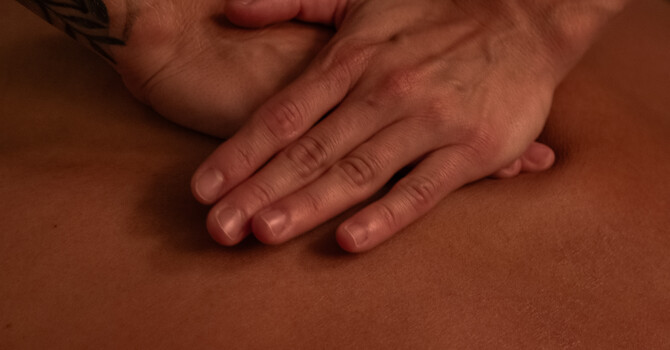
Cupping uses gentle suction to lift the skin and superficial tissues rather than pressing downward into them.
When appropriate, a practitioner may use small cups around a fully healed C-section scar and gently move them across the surrounding tissues.
This is sometimes referred to as myofascial decompression.
The goal is not to aggressively "break up" the scar. Instead, gentle cupping may help improve how the skin and superficial tissues move relative to one another.
Treatment may focus on areas where the skin feels restricted or where movement creates a pulling sensation.
Depending on the individual, cupping may be incorporated to help with:
- Restricted skin mobility
- A sensation of pulling around the scar
- Local muscle and fascial tension
- Sensitivity around the incision
- Improving tolerance to movement and touch
Scar treatment should generally feel controlled and tolerable. More pressure or stronger suction does not necessarily produce better results.
Combining Acupuncture and Cupping
Acupuncture and cupping use different approaches, which is why they can sometimes complement each other.
Acupuncture may be particularly useful for pain, sensitivity, altered sensation, and surrounding muscular tension.
Cupping provides a mechanical treatment that can be used to gently mobilize the skin and superficial tissues.
A treatment may also incorporate manual scar mobilization, exercises, mobility work, or treatment of surrounding areas such as the abdominal wall, hips, pelvis, or lower back.
Not every patient requires every technique.
At Reform Health + Wellness, treatment is based on what we find during your assessment rather than using the same protocol for every C-section scar.
When Can You Start Treating a C-Section Scar?
This is important: acupuncture, cupping, massage, or other direct scar treatments should not be performed over an incision that is still healing.
The incision should be completely closed and healed, with:
- No open areas
- No scabbing
- No drainage
- No signs of infection
- No unexplained redness or swelling
C-section scars commonly require approximately 6–8 weeks to heal, although healing time varies from person to person.
If there have been complications with healing or you are unsure whether your incision is ready for treatment, speak with your physician, midwife, or other appropriate healthcare provider first.
There is also no strict deadline for having a scar assessed. Someone several months—or several years—removed from a C-section may still seek treatment for persistent tightness, sensitivity, or discomfort.
What Does C-Section Scar Treatment Feel Like?
Treatment should be adapted to the sensitivity of the area.
Some scars are initially quite numb, while others are extremely sensitive to even light touch. Your practitioner can adjust the amount of stimulation accordingly.
Early treatment may begin with the tissues surrounding the scar rather than directly over the scar itself.
As tolerance improves, treatment may gradually progress.
Acupuncture needles are extremely thin and are generally placed strategically around the treatment area. Cupping used for scar work is typically much gentler than the stationary cupping techniques that can leave the darker circular marks many people associate with cupping.
The goal is to restore comfortable movement and improve tissue tolerance—not to aggressively irritate an already sensitive area.
Can Scar Treatment Help With the "C-Section Shelf"?
We are frequently asked whether scar treatment can eliminate the fold or "shelf" that sometimes develops above a C-section scar.
The answer is more complicated than many social media posts make it seem.
The appearance of the lower abdomen following pregnancy and C-section can be influenced by numerous factors, including:
- Skin changes from pregnancy
- Body-fat distribution
- Abdominal muscle function
- Scar mobility
- Genetics
- Pregnancy-related abdominal stretching
- Changes in connective tissue
- The location and orientation of the surgical incision
Improving mobility of a restricted scar may change how the tissues move and feel, but acupuncture or cupping should not be promoted as a method of eliminating a C-section shelf or permanently changing body shape.
Our primary focus is improving comfort, mobility, sensitivity, and function.
C-Section Scars and Postpartum Rehabilitation
Scar treatment can be helpful, but the scar should not always be viewed in isolation.
Pregnancy and C-section recovery can also affect the abdominal wall, pelvic floor, hips, pelvis, and lower back.
Depending on your symptoms, your treatment plan may also include exercises designed to improve:
- Abdominal strength
- Core coordination
- Hip and pelvic stability
- Spinal mobility
- Breathing mechanics
- Return to exercise
- Overall movement confidence
Our goal is not simply to treat the visible scar. We want to understand how the area is affecting the way you move, exercise, work, and participate in everyday life.
When Should a C-Section Scar Be Assessed Medically?
Acupuncture and cupping are intended for healed scars and should not replace appropriate medical care.
Contact your physician, midwife, or another appropriate healthcare provider if you notice symptoms such as:
- Increasing redness or warmth
- Significant swelling
- Drainage or pus
- The incision beginning to open
- Fever
- Severe or rapidly increasing pain
- A new lump or unexplained swelling around the scar
- Other concerning postpartum symptoms
These symptoms may require medical assessment before any type of manual therapy, acupuncture, or cupping is considered.
C-Section Scar Treatment in Red Deer
If your C-section scar has healed but continues to feel tight, numb, sensitive, tender, or uncomfortable, you do not necessarily have to simply ignore it.
At Reform Health + Wellness in Red Deer, Alberta, our team takes an individualized approach to postpartum musculoskeletal care. Depending on your assessment, treatment may include acupuncture, gentle cupping therapy, manual techniques, mobility work, and rehabilitation exercises.
Our goal is simple: help the area move and feel as normally as possible so you can get back to moving confidently.
Ready to Have Your C-Section Scar Assessed?
If you are experiencing persistent tightness, pulling, tenderness, numbness, or sensitivity around a fully healed C-section scar, book an appointment with Reform Health + Wellness in Red Deer.
We can assess the scar, surrounding tissues, and your overall movement to determine whether acupuncture, cupping, or another treatment approach may be appropriate for you.
SOURCES & FURTHER READING
- Gaillardetz AM, Wagner RM, Hughes P, et al. A Comparison of Scar Infiltration, Scar Deactivation, and Standard of Care for Treatment of Chronic, Postsurgical Pain After Cesarean Section in the Primary Setting: A Comparative Effectiveness Trial. Pain Research and Management. 2026;2026(1):3774454. DOI: 10.1155/prm/3774454.
- Vo BTN, Thai TBT, Loh EW, Tsai YL, Tam KW. Effects of Acupoint Stimulation for Postoperative Analgesia After Cesarean Delivery: A Systematic Review and Meta-Analysis of Randomized Controlled Trials. Canadian Journal of Anesthesia. 2026;73(6):556–571. DOI: 10.1007/s12630-026-03147-x.
- Usichenko TI, Henkel BJ, Klausenitz C, et al. Effectiveness of Acupuncture for Pain Control After Cesarean Delivery: A Randomized Clinical Trial. JAMA Network Open. 2022;5(2). DOI: 10.1001/jamanetworkopen.2022.0517.
- Lubczyńska A, Garncarczyk A, Wcisło-Dziadecka D. Effectiveness of Various Methods of Manual Scar Therapy. Skin Research and Technology. 2023;29(3). DOI: 10.1111/srt.13272.
This research is provided for educational purposes. Evidence regarding C-section scar treatment continues to evolve, and individual treatment recommendations should be based on an appropriate clinical assessment.